User interview record generator interface showing transcript text becoming structured evidence.

Tool task

User Interview Record Generator

Stay present during the interview, then structure the evidence afterward. Convert transcripts into reusable research records, not generic meeting notes.

Turn one interview into a structured research record

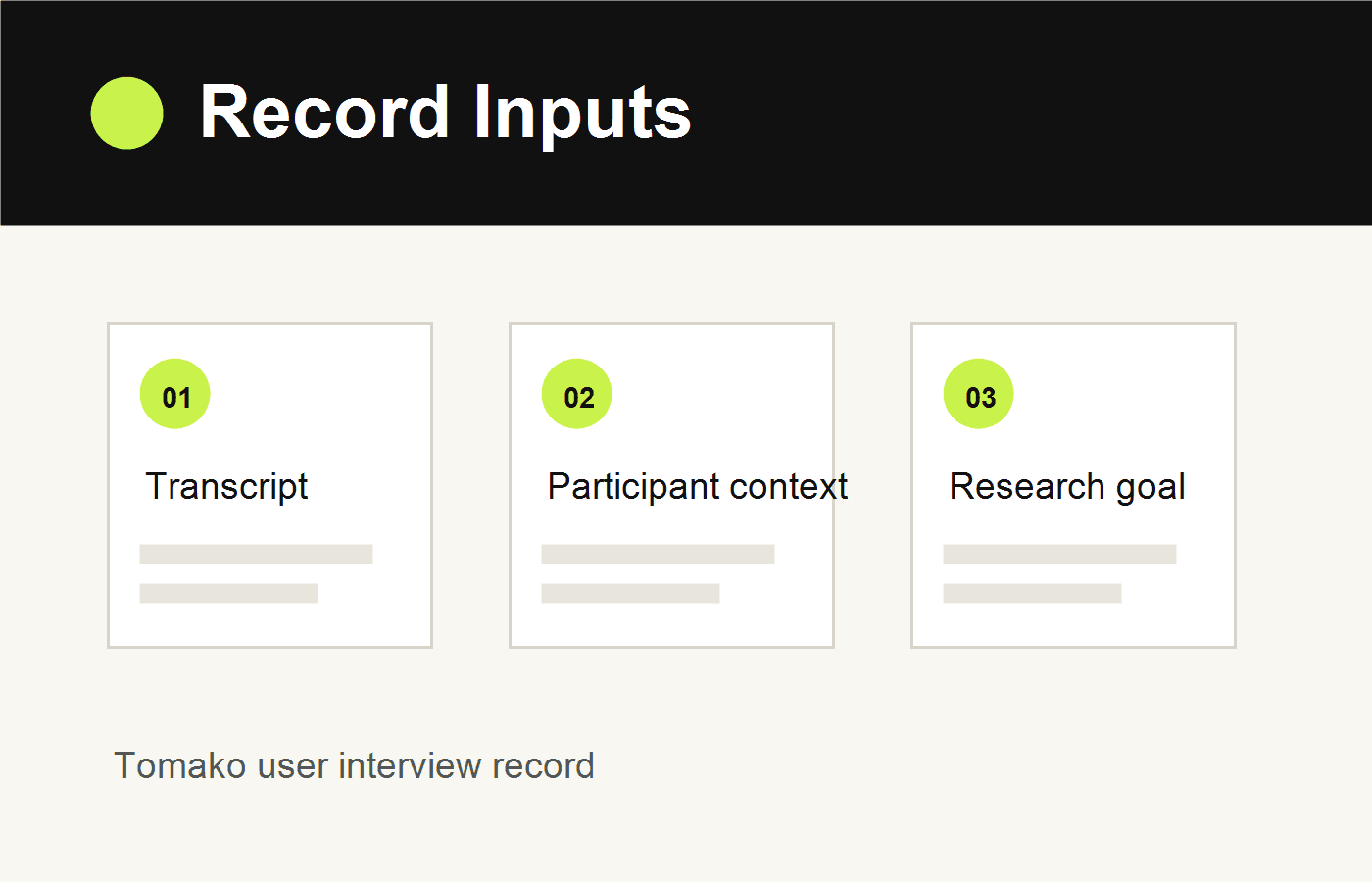
Paste one interview transcript or detailed notes. Tomako uses an Agent to extract reviewable evidence: behavior, pain costs, alternatives, buying signals, quotes, missing information, and next follow-ups.

After the interview

Interview text

Paste one interview transcript or detailed notes. Do not submit private, confidential, or sensitive personal information.

Additional context

These details help the Agent tell evidence from interview background.

What you get

Behavior timeline

Prioritize the participant's latest concrete experience instead of turning the interview into a generic summary.
Pain and cost

Break 'it was annoying' into time, money, rework, delay, risk, or emotional cost with confidence.

Alternatives and workflow

Capture the tools, templates, services, or manual process the participant uses today.

Missed probes and review checks

Mark what was not explored deeply enough and which claims need source transcript review.
Best-fit use cases

  • You completed a real interview and have a transcript or detailed notes.
  • You want a reviewable evidence record, not generic meeting notes.
  • You need to separate quotes, behavior, inference, and next follow-up questions.
  • You are collecting multiple records before synthesizing cross-interview insights.
Supported use case visual for the interview record generator, showing transcript, behavior, and evidence fields.

What this does not replace

  • It does not replace audio transcription, privacy redaction, research ethics review, or team review.
  • It cannot decide that a product is worth building from one interview.
  • Do not submit confidential customer data, sensitive personal information, or unauthorized recordings.
  • If the transcript is too short, test text, or contains no participant answers, the page blocks submission.

Failure and recovery

  • If task submission fails, your input stays in place so you can retry.
  • If the Agent does not write back a structured result, the page shows the task id for debugging.
  • If the result type or schema does not match, the page will not display a fake success state.
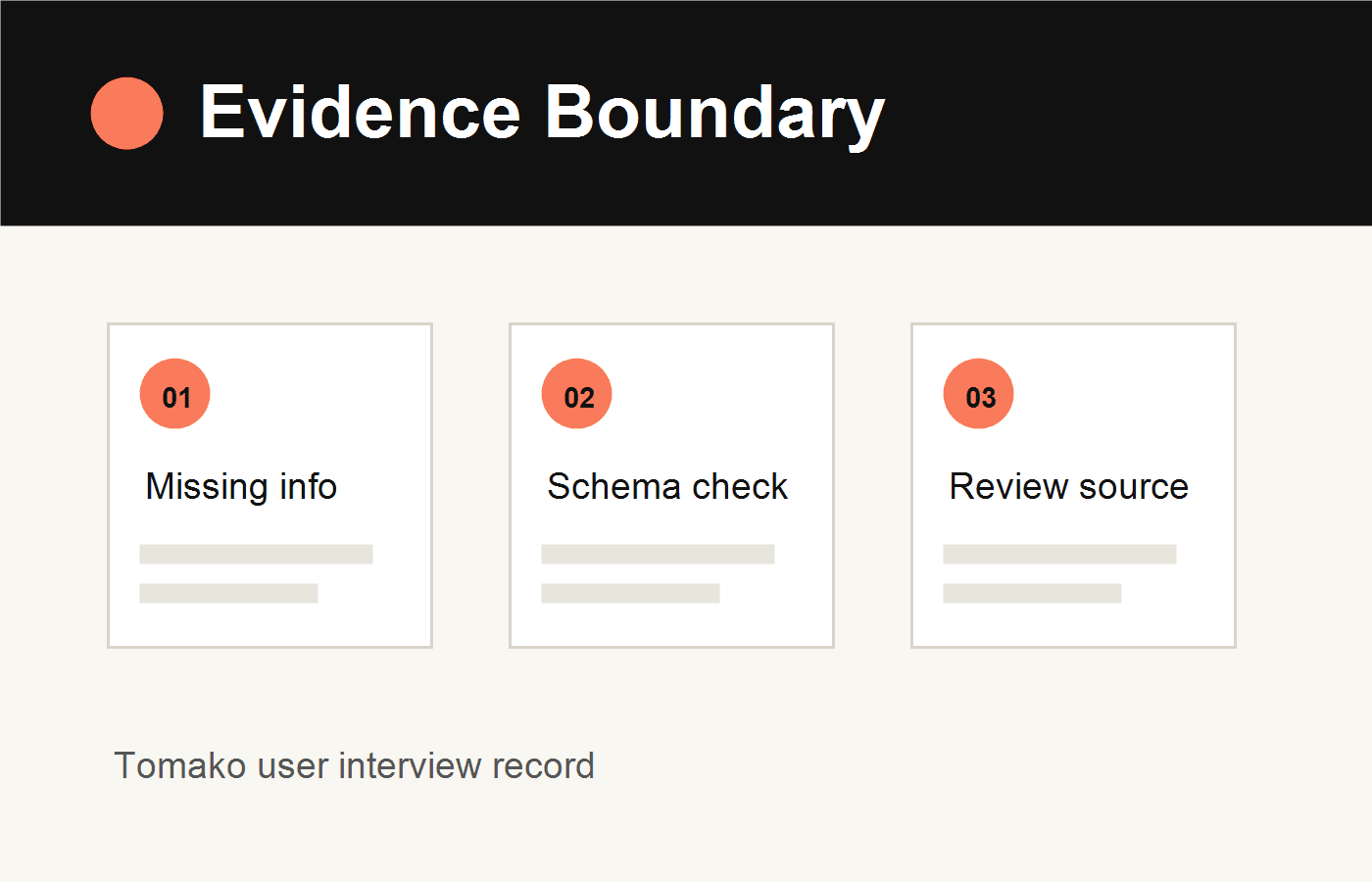
  • If evidence is missing, the result leaves arrays empty and lists the gap in missingInfo instead of inventing details.
Failure recovery visual for the interview record generator, showing task id, writeback validation, and missing information.

How to use the record

  • First compare quotes, pain cost, buying signals, and participant profile against the source transcript.
  • Move missed follow-ups into the next interview guide so future interviews go deeper.
  • Only use evidence with concrete behavior and cost in decision materials.
  • After 5-10 records, use the insight report generator to synthesize patterns.
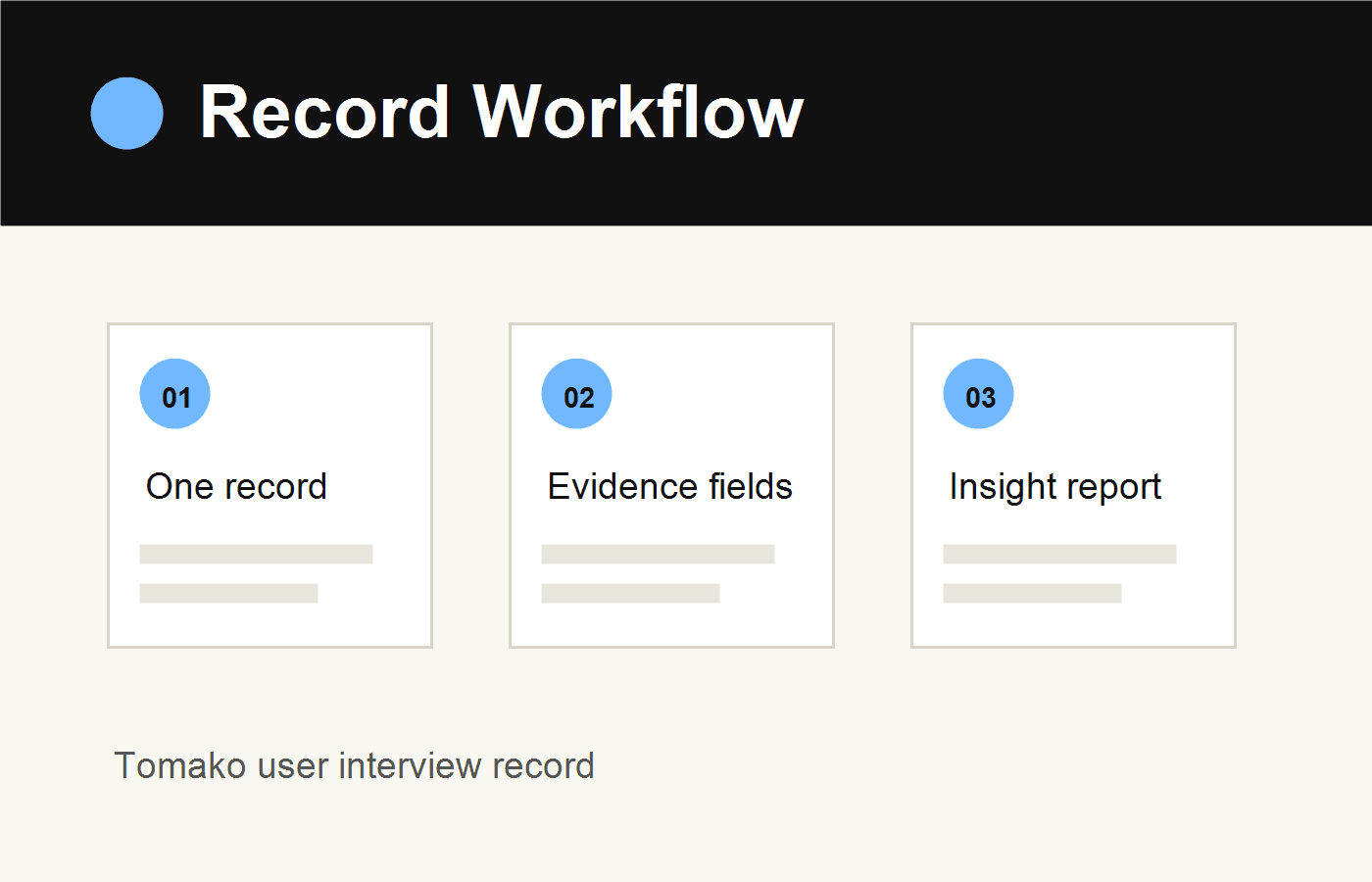
Result usage visual for the interview record generator, showing one record feeding a multi-interview report.

Why use Tomako here

Evidence-first structure

The output is organized around source evidence and does not treat polite feedback as a strong conclusion.

Research boundaries stay visible

Missing information and review checks remain visible so the team can return to the transcript.

Connects the research workflow

The guide, one-interview record, and multi-interview report can work as one research chain.

Less manual reshuffling

Pain, alternatives, buying signals, and follow-ups are split into stable fields for reuse.
Quality standard for interview records

  • Facts, quotes, inference, and follow-up questions should be separate.
  • Missing evidence should be marked as missing instead of filled in.
  • Pain needs cost, context, and a trigger, not only a sentiment.
  • The result must be copyable, reviewable, handoff-ready, and tied to a task id.
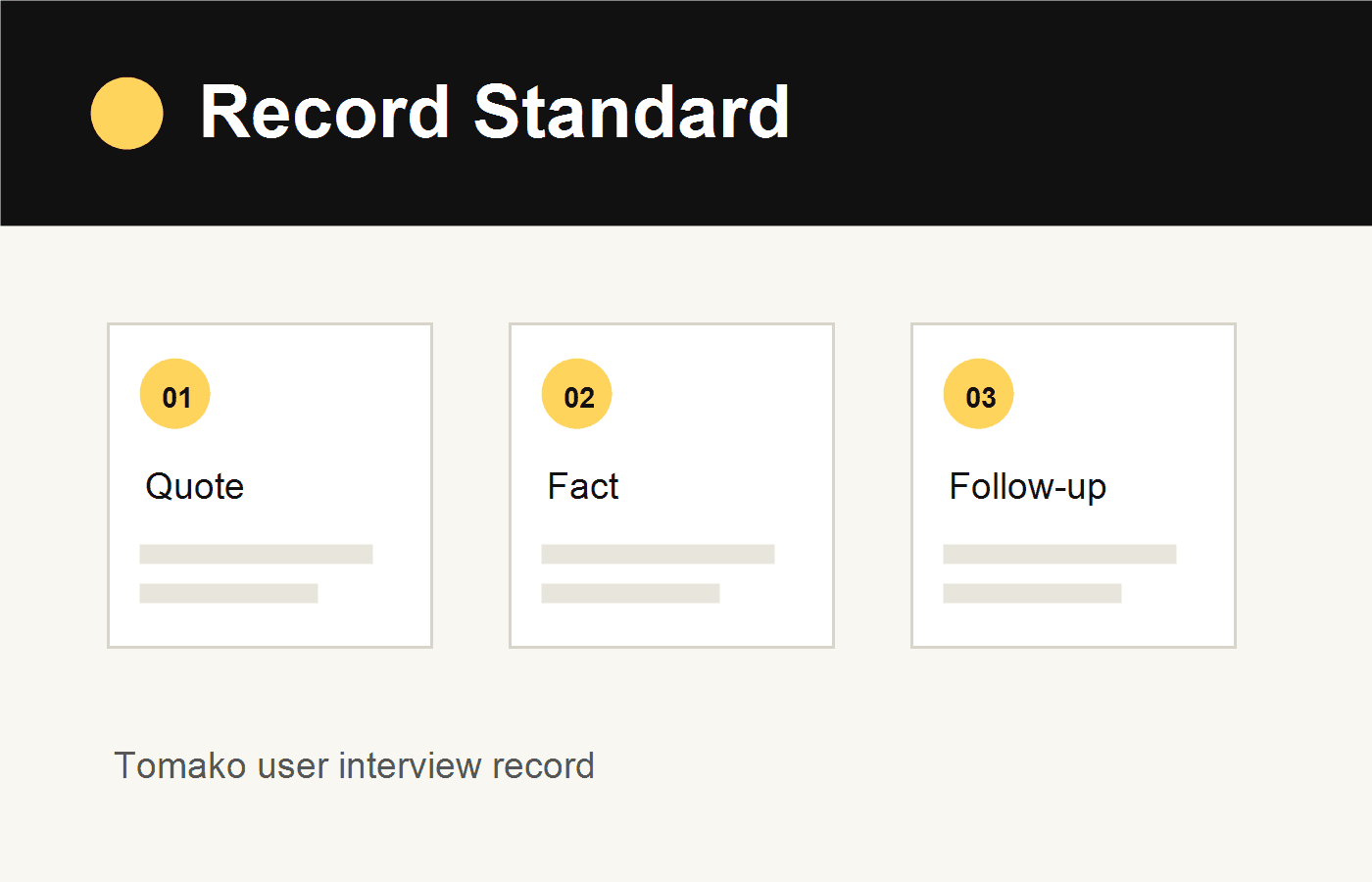
Quality standard visual for interview records, showing quote, fact, inference, and follow-up fields.

FAQ

Can this tool upload audio?

Not in this version. Use a meeting or transcription tool first, then paste the text here for structuring.

Can one interview produce a conclusion?

No. One record is best for improving the next interview. Repeated patterns across several records are better for opportunity and priority decisions.

Will it preserve participant quotes?

It extracts high-value quotes, but you should still compare them with the source transcript so context is not lost.

Does the result need human review?

Yes. Pay special attention to buying signals, pain cost, participant identity, and private information.

After you structure several records, synthesize cross-interview insights, opportunity maps, and next experiments.