Interview strategy
Choose discovery, problem validation, solution validation, pricing, churn, or positioning before writing questions.

Tool task
Go beyond a generic question list. Create a decision-oriented interview playbook: who to recruit, what to ask, what to listen for, and which answers count as strong evidence.
Enter your product context, research goal, and target participants. Tomako uses an Agent to produce a structured guide with missing information, assumptions, and human review checks.
Choose discovery, problem validation, solution validation, pricing, churn, or positioning before writing questions.
Turn 'talk to users' into concrete screener criteria that prioritize people with recent real behavior.
Each question explains why it exists, what to listen for, how to probe, and which leading behavior to avoid.
Separate strong signals, weak feedback, risks, missing information, and post-interview handoff actions.
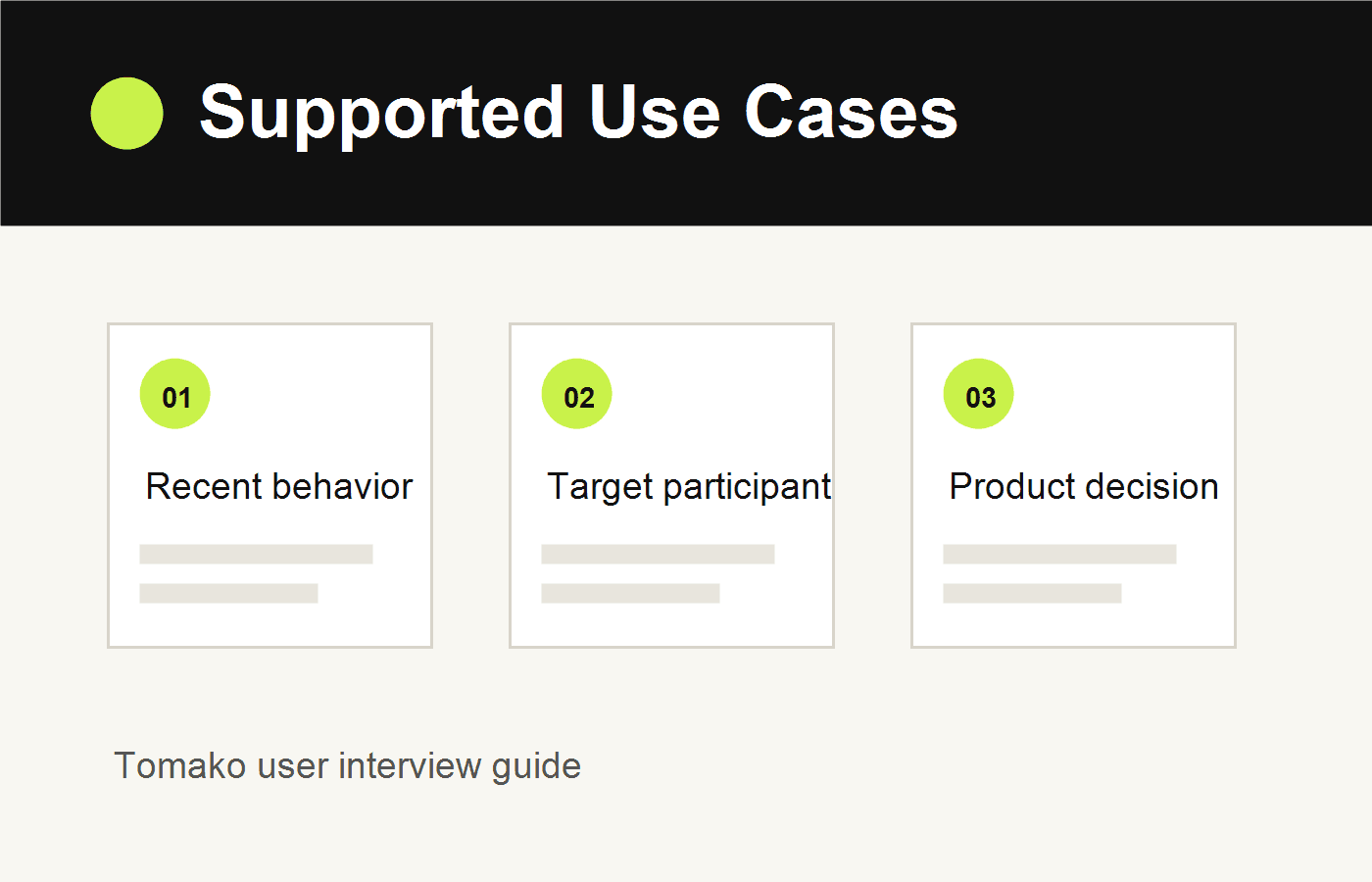
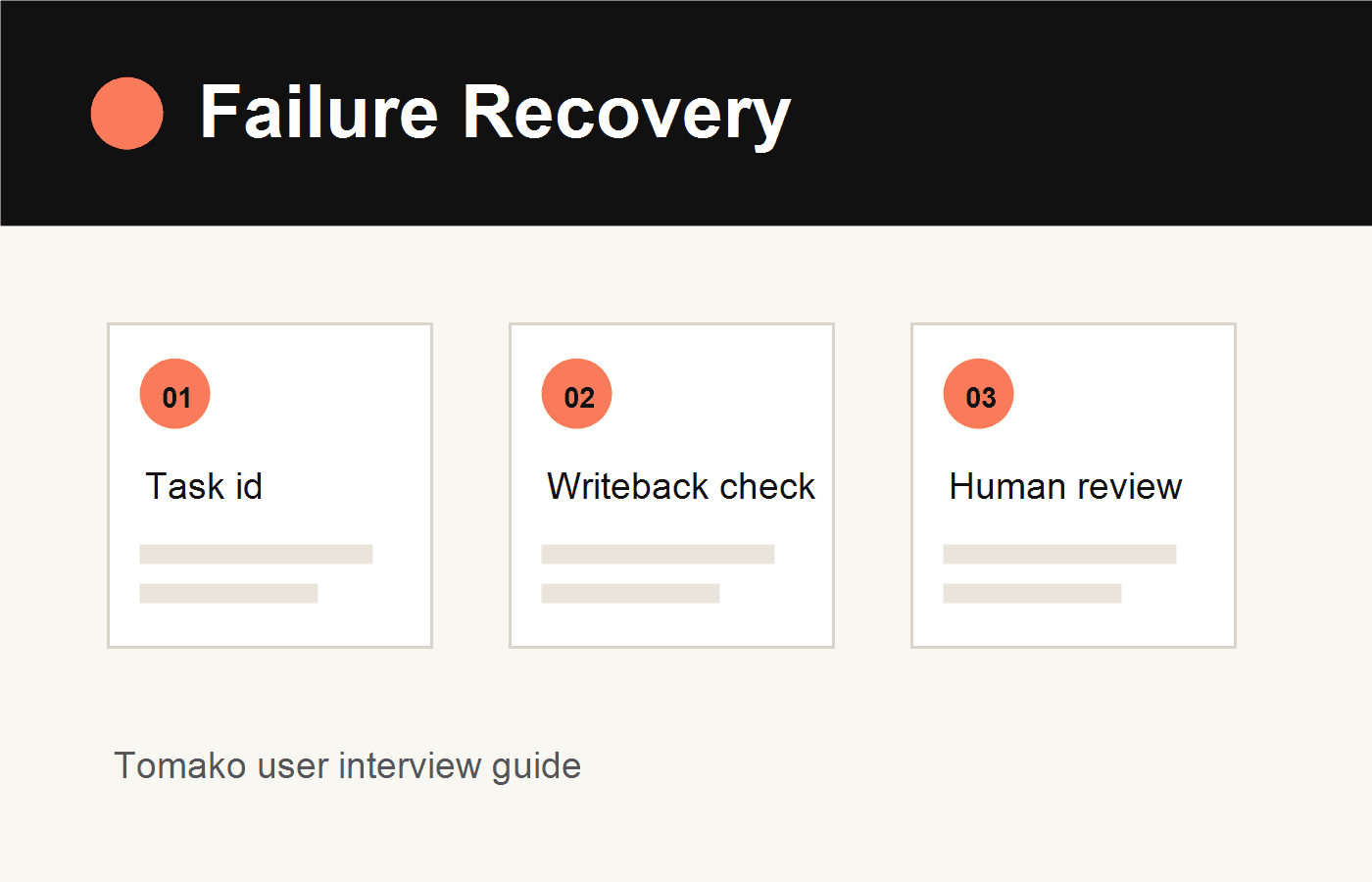
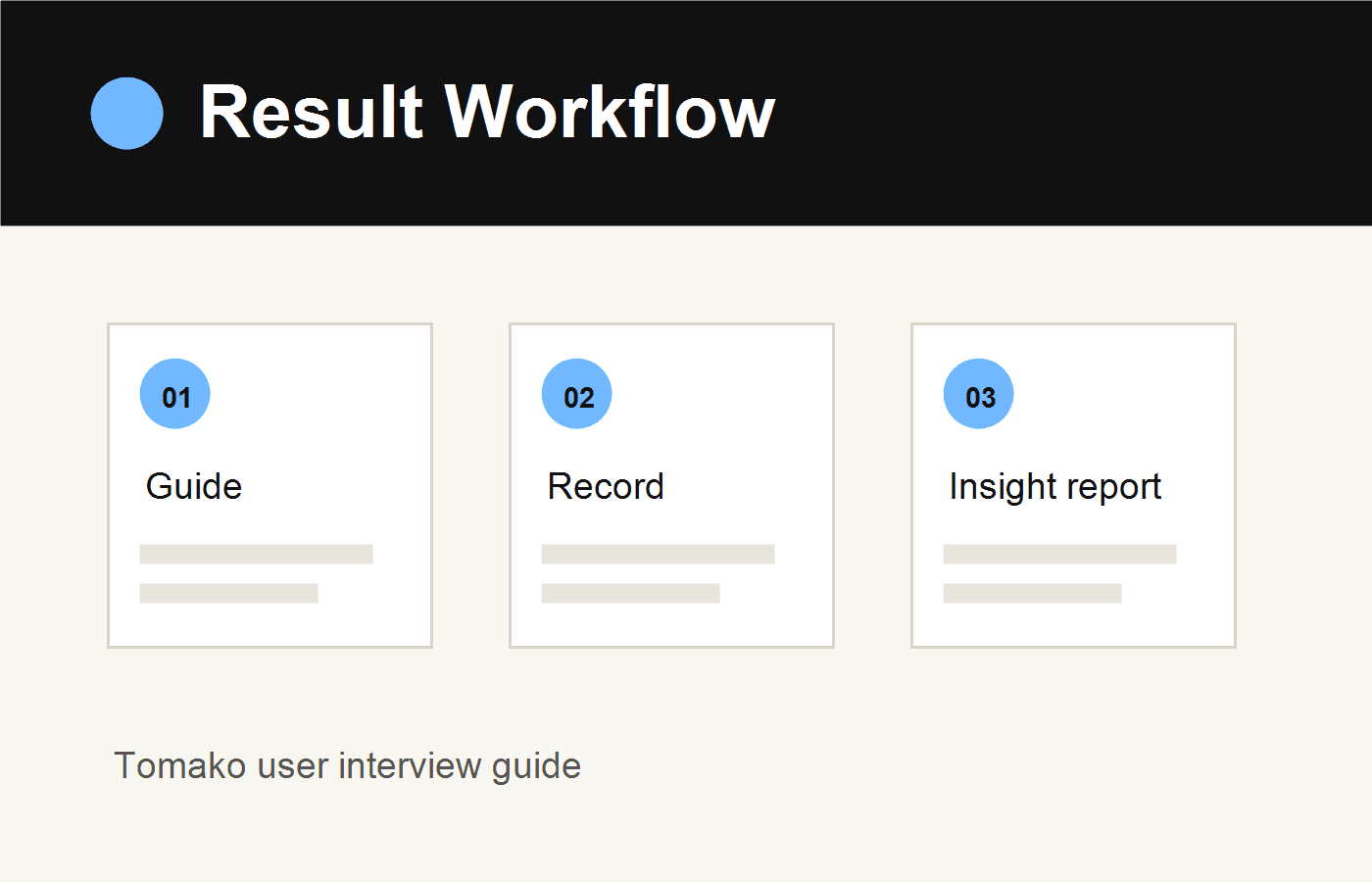
The result ties questions, probes, signals, and handoff actions back to the product decision you need to make.
The page exposes missing information and review checks, and it does not pass off a local template as an Agent result.
The same interview output can feed structured notes and multi-interview insight reports.
Indie builders, PMs, and founders can get an executable draft, then calibrate it with one or two pilot interviews.
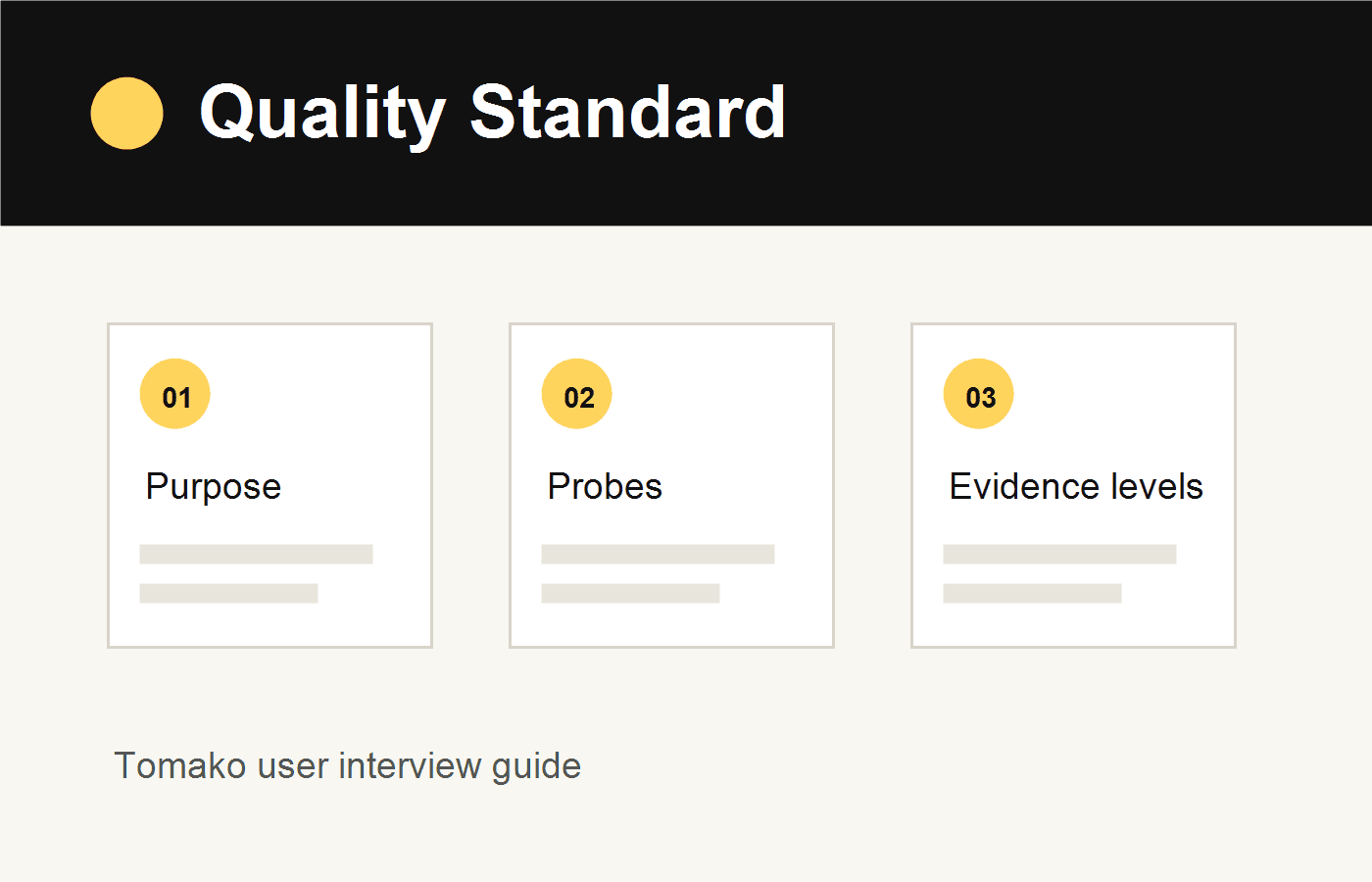
No. It designs interviews that produce better evidence. The build decision still needs transcripts, behavior data, competition, technical cost, and real conversion tests.
Yes, but do not rely on stated intent alone. Past spending, current workaround, cost of the problem, and willingness to enter a next-step test matter more.
Yes. Without a prototype, discovery or problem validation is usually stronger. Reconstruct recent behavior before testing solution reactions.
Interviews affect recruiting, privacy, sensitive questions, and product judgment. Tomako drafts a structured guide, but your team still needs to check fit and compliance.
After the interview, turn the transcript into a structured record, then synthesize multiple records into insights.