A focused name shortlist
The first pass returns a small set of candidates, each with a core idea and basic fit notes for team discussion.
Tool task
Built for early app, web, SaaS, and AI product naming. Start with a small shortlist backed by clear rationale, then run deeper domain, search-noise, and trademark entrypoint checks only for names worth keeping.
Staged naming
Input
Brand tools
Output
Generator
Boundary
Updated Jun 29, 2026
Enter the product idea, target markets, and domain preferences to get 3-5 names worth discussing; expanded checks run only after you open a candidate.
Generate product name candidates
Enter the product idea and domain preferences. The first pass returns candidates only; deeper checks run after expansion.
Target market / language
Domain extensions to prioritize
The first pass returns a small set of candidates, each with a core idea and basic fit notes for team discussion.
Pronunciation, length, naming style, and selected domain extensions are screened first so weak directions can be removed early.
Open a candidate to continue with domain signals, search noise, trademark entrypoints, risk notes, and next checks.
Names, rationale, screening signals, and risk notes can be copied into a naming review with product, design, growth, or legal teammates.
The first pass answers whether there are names worth keeping. Domain price, search noise, and trademark safety are not guaranteed up front; expanded checks are pre-screening only, not registrar confirmation or legal advice.
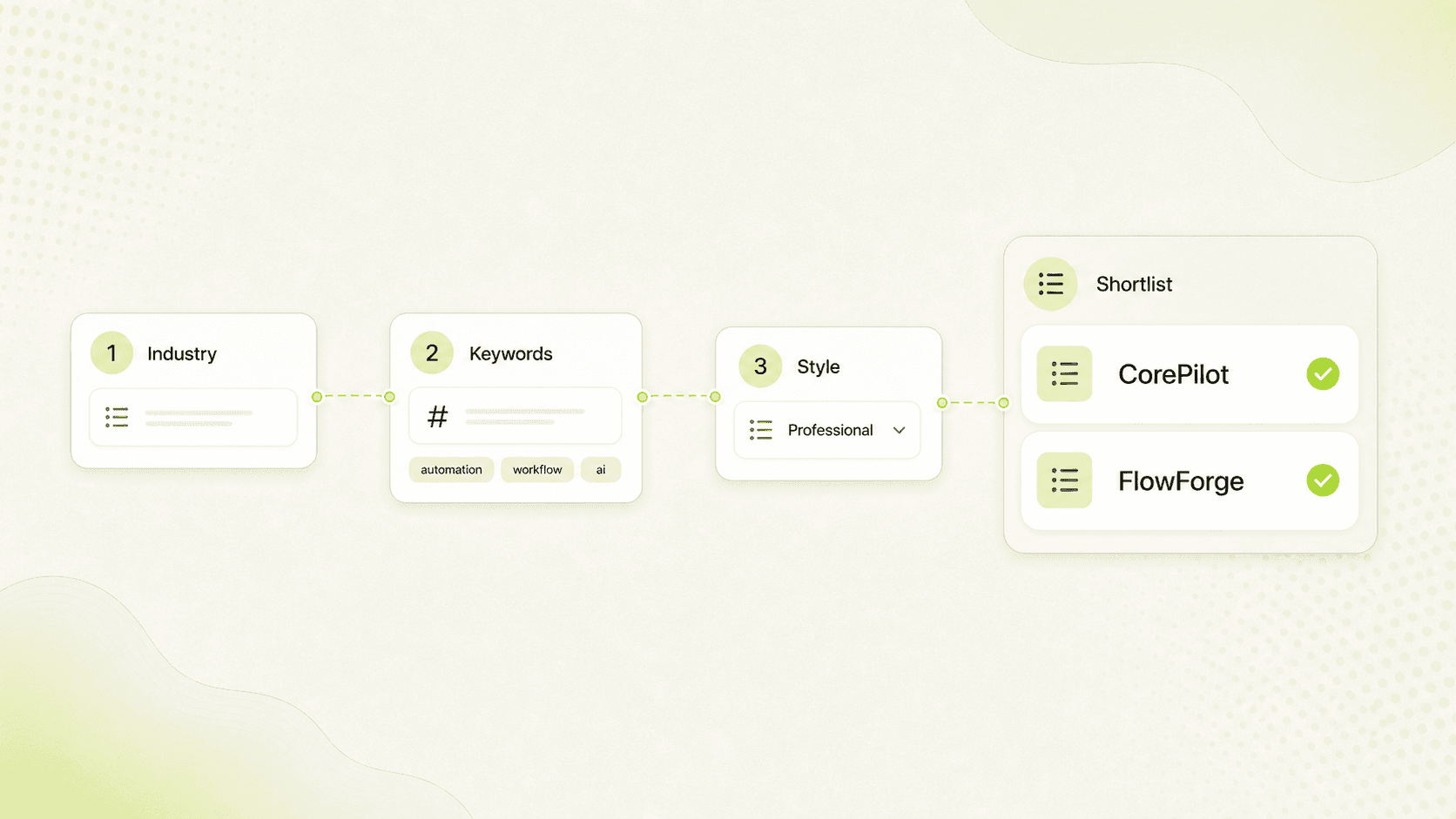
Describe the product idea, target users, naming vibe, and any working name.
Choose target markets, domain extensions, and a budget ceiling; the first pass stays lightweight.
Review 3-5 candidates with the core idea, pronunciation fit, and basic background first.
Expand a promising name to trigger a separate domain, SEO, and trademark pre-screen.
Stage one answers whether there are names worth considering, keeping wait time and unnecessary deep-check cost low.
Stage two analyzes only the candidate the user opens, adding domain, search, trademark entrypoints, and risk notes.
Stage three is for final decisions: compare 2-3 finalists with red/yellow/green verdicts and next actions.
Why the output is staged
Remove names that are hard to say, too generic, too close to competitors, or unclear about the product direction before buying domains.
Read 2-3 candidates to real users or teammates and watch whether they can repeat, spell, and roughly understand the product.
Run expanded checks only for finalists, then review domain price, search noise, trademark entrypoints, and manual review risks.
How to judge the shortlist
A good naming tool should reduce choice cost. This page starts with 3-5 directions worth judging instead of flooding you with dozens of similar words.
Candidates use your product idea, audience, naming style, working names, and target markets instead of treating every app, SaaS, and AI tool the same.
Domain, search, and trademark pre-screening are triggered per expanded candidate, which fits early naming work while positioning is still moving.
Domain states, trademark entrypoints, and legal boundaries are separated clearly, so each name becomes a decision starting point rather than a false clearance claim.
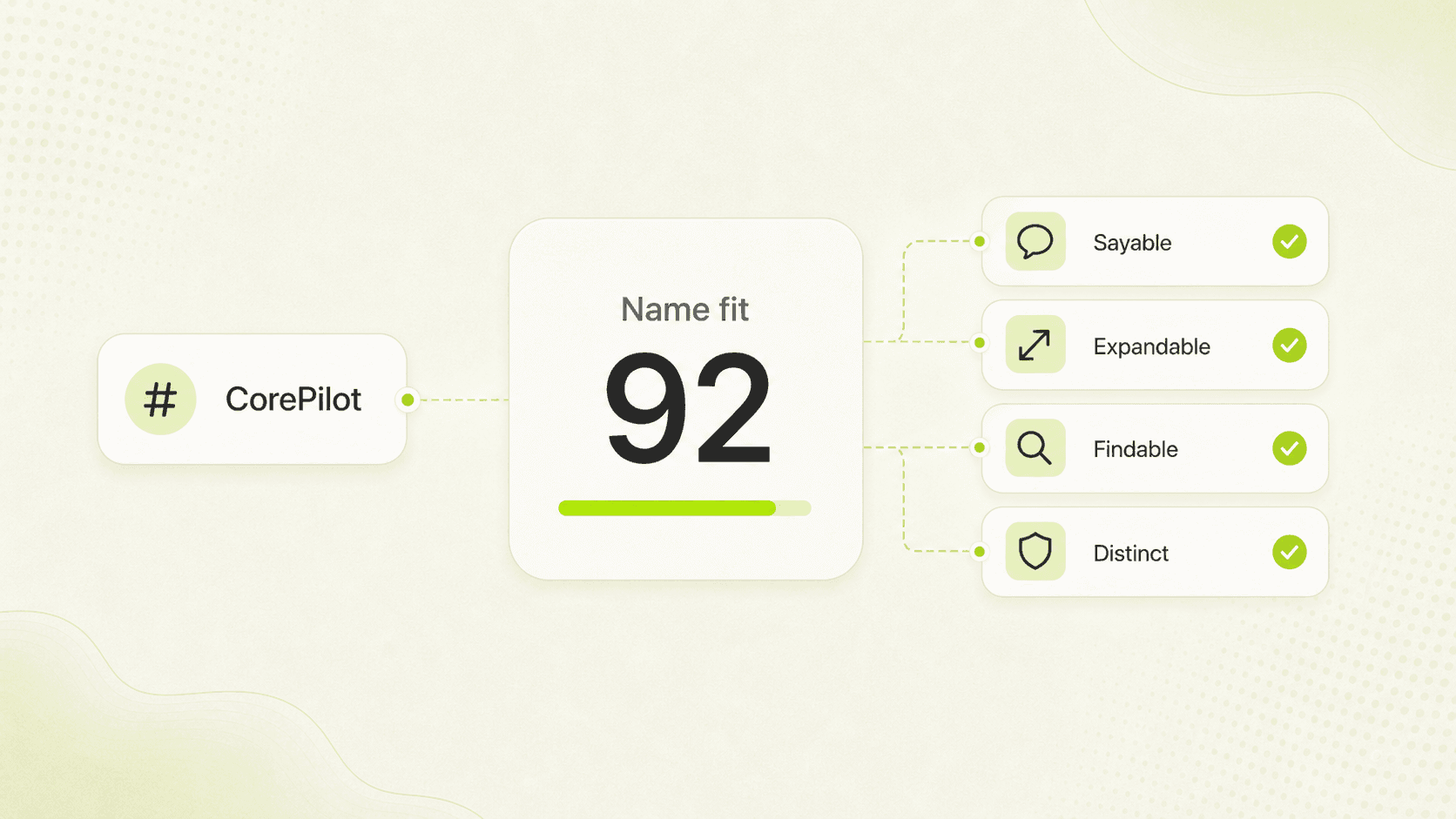
Sayable: teammates, users, and investors can repeat it after hearing it once.
Expandable: it is not trapped inside today's narrow feature scope.
Findable: brand search, app stores, GitHub, social handles, and domains still have room.
Explainable: the metaphor connects naturally to positioning, user context, or brand voice.
Distinct: spelling and pronunciation do not blur into nearby software, AI tools, or category leaders.
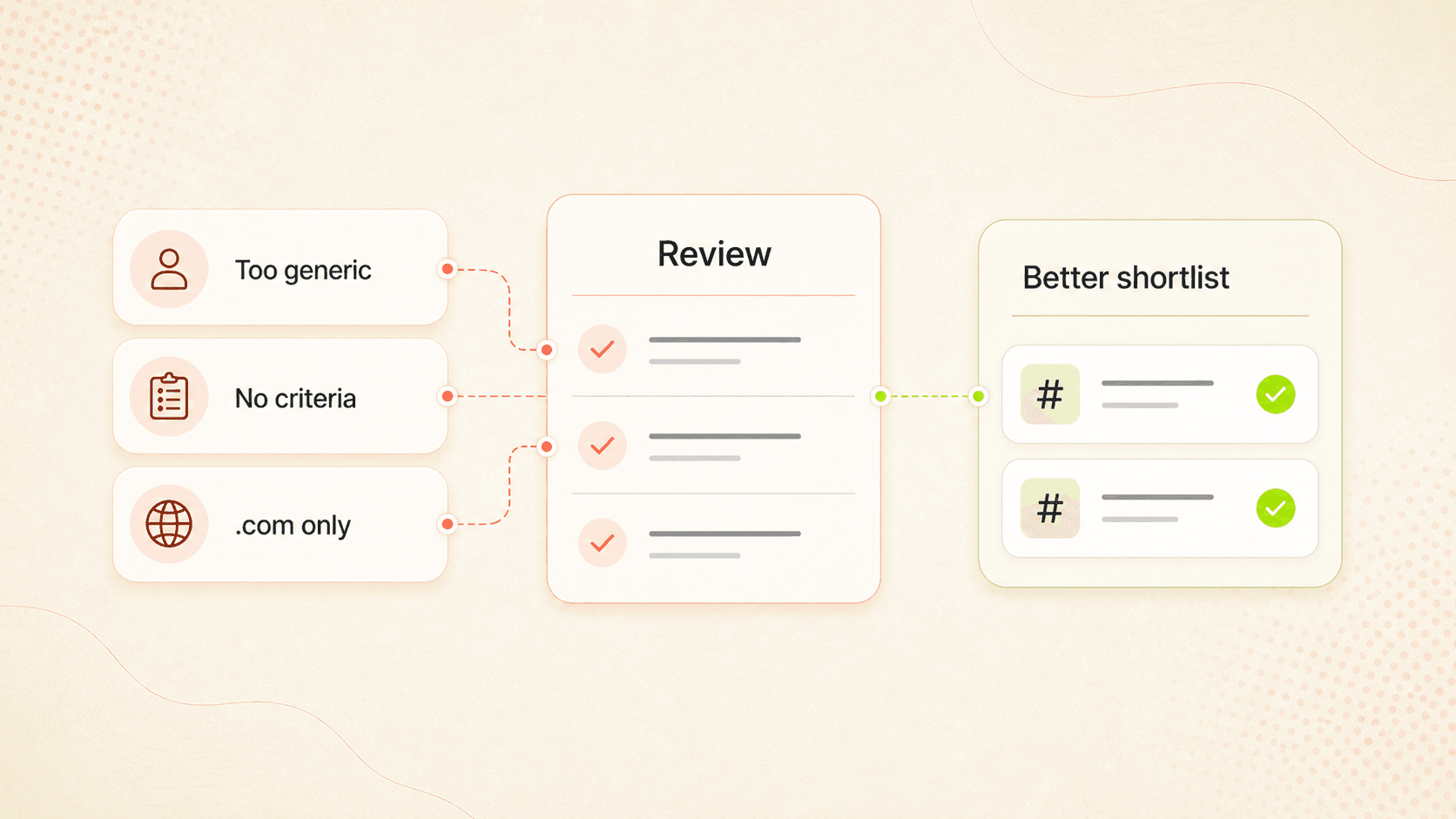
Indie builders naming a new app, web tool, plugin, or AI side product.
Early teams that need expandable name directions while positioning is still moving.
Founders with 2-5 candidates who need to decide which one deserves domain spend.
Global products balancing English readability, Chinese perception, and search noise.
Product, design, and growth teams preparing a naming workshop with a shared shortlist and criteria.
Most early names will be discarded. A lightweight first pass followed by per-name expansion lowers wait time and unnecessary analysis cost.
No. Describe what the product does, who it serves, and the feeling it should create. A rough idea is enough for a first direction, and the shortlist can help you refine positioning.
No. Domain status comes from fast RDAP/DNS signals. Final availability and price must be confirmed at a registrar, especially for premium domains.
No. The tool provides official database entrypoints, search queries, and risk notes. It cannot provide legal clearance. Run professional clearance before investing heavily in a brand.
Yes. Add your candidates line by line. The tool will include them in the first screen and can generate nearby variants from the product positioning.
The form content is used as context for name generation and expanded checks. Do not submit confidential source code, unreleased trade secrets, customer data, or sensitive personal information.
Use the names as starting points. Before commercial use, confirm domains, app stores, social handles, trademark similarity, and target-market meaning, with professional trademark review when needed.
Once you have a shortlist, check whether positioning, channels, assets, and launch metrics are ready.